
Leggi questa pagina in italiano
What Is NLP
Discover what NLP is, who invented it, and how Neuro-Linguistic Programming works according to Giovanni Ceroni's method in "The Invisible Blade".
Neuro-Linguistic Programming was born from a very concrete question, far from academic: why do some people achieve exceptional results, while others, under the same conditions, seem to navigate in the dark? It's a question that touches on success and failure, freedom and pain, and sooner or later it knocks on everyone's door.
What it is
NLP, Neuro-Linguistic Programming, comes from the work of Richard Bandler, a mathematician, and John Grinder, a linguist, who set themselves a precise goal: not to study failure, but to study what works. They focused their observations on therapists who achieved exceptional results with patients other professionals had failed with — in particular Virginia Satir, Milton Erickson and Fritz Perls — interviewing them and analyzing their strategies until they identified what they called "the difference that makes the difference". The work continued under the guidance of anthropologist Gregory Bateson, until it became a structured methodology.
The name of the discipline itself describes how it works:
- Programming: the ability to organize communication and the nervous system to achieve specific results and goals.
- Neuro: the nervous system through which every experience is perceived, via the five senses, and processed.
- Linguistic: the language and non-verbal communication through which internal representations are encoded, ordered and given meaning.
The central insight was this: if a result has a structure, that structure can be understood, learned and replicated. "Programming" is not a direct command over the person, but a process of reorganizing experience through representations, language and internal state. The intervention doesn't act directly on external reality, but on the internal structure through which that reality is experienced. This is the heart of modeling in NLP: identifying the strategy of those who achieve excellent results, to make it transferable.
Why it matters
Understanding what NLP is changes the starting point for approaching a problem. If a limitation depended only on external factors, the room for intervention would be minimal. But if many limitations depend on learned patterns — habitual ways of perceiving, interpreting and reacting — then new patterns can be learned in their place. That's important news, because it gives back the power of choice to someone who, until that moment, felt simply at the mercy of events.
NLP doesn't promise magic shortcuts. It offers a method for identifying where, in the perception–interpretation–state–behavior–result chain, one can intervene with precision, instead of simply enduring events or "pushing harder" in the same direction that hasn't worked so far.
How it works
The central mechanism of NLP concerns the relationship between internal structure and lived experience. Every person doesn't react to reality as it is, but to the representation they've built of it — a concept that in Giovanni Ceroni's books is called "the map". Change the map, and the available responses change.
Modeling applied to personal development works like this: you observe the strategy of someone who achieves an excellent result in a specific area, identify the steps — not only behavioral, but also internal: representations, state, language — and make that structure transferable and learnable by others. It's not about superficially copying a behavior, but understanding the structure that generates it.
A fundamental point, clearly stated in the books, is that this methodology, within the context of "La Lama Invisibile" / "The Invisible Blade" series, is not applied to clinical or psychopathological matters, which remain the exclusive competence of qualified healthcare professionals. The declared goal is to offer tools to those who want to leave behind limiting behaviors and generate concrete change in their life, personal relationships and professional life.
Common mistakes
A first common mistake is considering NLP a set of communication "tricks" to apply mechanically to others, without first having tested them on yourself. Ceroni's books insist on the opposite point: every tool should first be applied to your own experience, your own fears, your own contradictions.
A second mistake is stopping at theory. "Knowing isn't enough. It's application that transforms": NLP isn't a philosophy to understand intellectually, but a structure that produces results only when it's observed, applied and tested in real practice, consistently.
A third mistake is expecting an immediate and definitive change in every circumstance. In some cases change can happen quickly, even after years in which a pattern seemed set; in other cases several steps are needed to stabilize it. It's not speed that makes the difference, but the direction and quality of the change.
Practical example
Imagine two people receiving the same critical feedback from a manager. The first experiences it as confirmation of their own inadequacy and shuts down. The second interprets it as useful information to correct a strategy, and improves their performance. The external event — the same words, in the same context — is identical. What changes is the internal structure through which it's processed: the representations, the state the person is in at the moment they receive the feedback, the internal dialogue that follows. NLP works exactly on this space, the one between stimulus and response.
Applications
The principles of NLP, as developed in "The Invisible Blade Method™" series, find application in very concrete areas: personal growth and managing one's own emotions and limiting beliefs; effective communication, both in personal and professional relationships; leadership and managing collaborators; sales and negotiation; public speaking; coaching, as a structured profession of supporting other people's change; sport and performance under pressure.
Frequently asked questions
Is NLP a therapy?
No. In the context described by Ceroni's books, NLP is not applied to clinical or psychopathological matters, which remain the exclusive competence of qualified healthcare professionals. It is a method of personal growth and coaching.
Who invented NLP?
Richard Bandler, a mathematician, and John Grinder, a linguist, in the 1970s, studying the strategies of excellent therapists such as Virginia Satir, Milton Erickson and Fritz Perls, under the guidance of anthropologist Gregory Bateson.
What does the acronym NLP mean?
Neuro-Linguistic Programming: Programming indicates the organization of communication and the nervous system toward a goal; Neuro indicates the nervous system through which experience is perceived; Linguistic indicates the language through which representations are encoded and given meaning.
Does NLP work the same way for everyone?
The timing and modes of change vary from person to person. In some cases change can be fast, in others it requires several steps to stabilize. What matters is consistency of application, not speed.
Do you need formal training to apply NLP to yourself?
The basic concepts can be observed and applied independently through the study and personal practice described in the books; structured training becomes relevant for those who want to practice as a coach professionally.
What's the difference between knowing NLP and applying it?
It's the difference between knowledge and transformation. The books emphasize that the value doesn't depend on how many pages you read, but on how much you choose to concretely apply what you've learned, observing its effects in your own life.
Related concepts
NLP Presuppositions, The Map Is Not the Territory, What Is an Internal State, Internal Dialogue, Representational Systems, the Meta Model, the Milton Model, Rapport, Coaching.
Go deeper
These concepts are covered in full in the first chapter of Volume I of "The Invisible Blade", where Giovanni Ceroni reconstructs the origins of NLP and lays the foundations for the whole path that follows in the series.
Go deeper in the books
If this topic is useful to you, you can explore it further in the "The Invisible Blade" series, where concepts are connected to examples, models and practical applications.
Related articles
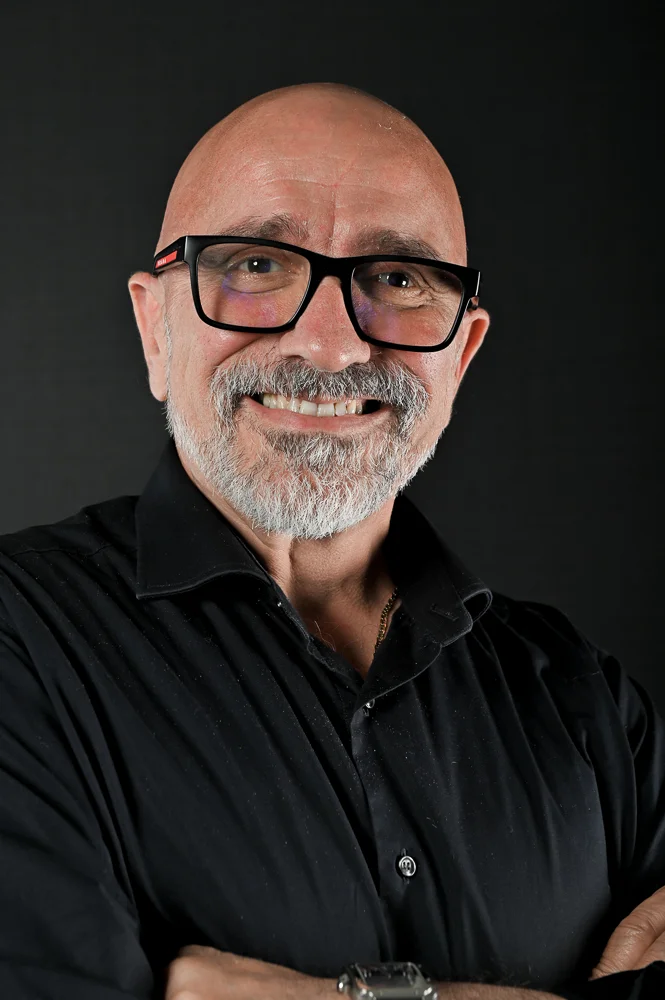
Mental Coach and author of the La Lama Invisibile / The Invisible Blade series.